

Share This

The internet has been the most important breakthrough of the last two thousands years, probably even more important than the invention of the wheel. Although the world wide web is celebrating its 25th anniversary, the spread of the internet hasn’t reached the entire world’s population yet. We are those who believe we are going to live on the internet in the next decade, but how can we do it if there are people who still don’t even know what the internet is about?
In the past years, several attempts have been made, but it seems that there is still a lot to do. It’s difficult to reach certain regions and build a nonprofit organisation that is fully independent. If Wikipedia decided to build a nonprofit organisation to spread the internet usage, it will make sense; but when we see the biggest tech giants, that make money through the internet, working on this problem, we always think they want to grow, financially.
In 2014, according to the International Telecommunication Union, 77 people out of 100, in developed countries, are on the internet. In these countries, we still haven’t reached a 100% market penetration, because there are still people who haven’t lived the internet revolution on their skin. I am referring to the older generations of people that didn’t want to get involved in the technological progress of the last years. It’s natural to see a small 23% left out, which will become insignificant as new generations will replace the old ones. In developed countries, the internet is everywhere, from houses to public spaces; it’s not a matter of not having connection, but more about forcing people to use it.
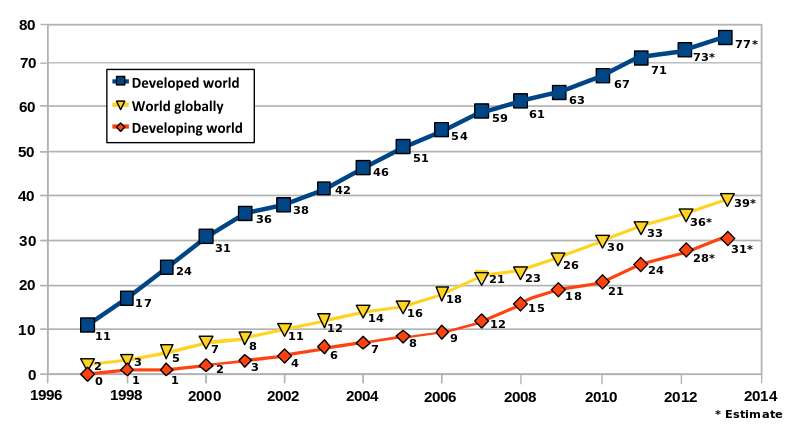
On the other hand, in developing countries, only 31 people out of 100 are on the internet. In these cases, we have a massive problem in terms of building the infrastructures to bring the internet in determined regions. Whereas in developed countries we have the issue to teach people how to use the internet properly, in these regions we can’t even do it, because there is no physical presence.
In the past months, we have seen the raise of two projects, led by tech giants. Internet.org, the controversial nonprofit organisation, led by Facebook, has finally released a project to bring the internet everywhere, Connectivity Lab. After acquiring the five-member team of UK-based startup Ascent, Facebook is thinking to bring the internet through the sky thanks to drones and lasers.
In the same way, Google has released project Loon, which, instead of using drones, tries to bring the internet through balloons. Although both projects are completely different, they share something in common, the sky. It seems the only way to bring the internet is through the sky, without having problems with cables and different landscapes.
If we look at the number of people who are using the internet globally, we find a mere 39% out of 100. In a world where the internet seems to be everything, from our point of view, we feel powerless when we look at these figures; but if we have been able to build the main infrastructure, it shouldn’t be a problem to expand it.
However, in these days, we are risking that companies, such as those behind internet.org, could start a monopoly of the internet. It’s a noble cause to bring connection to third world countries, but if you are making money out of it, what company or organisation should take care of a problem like this?
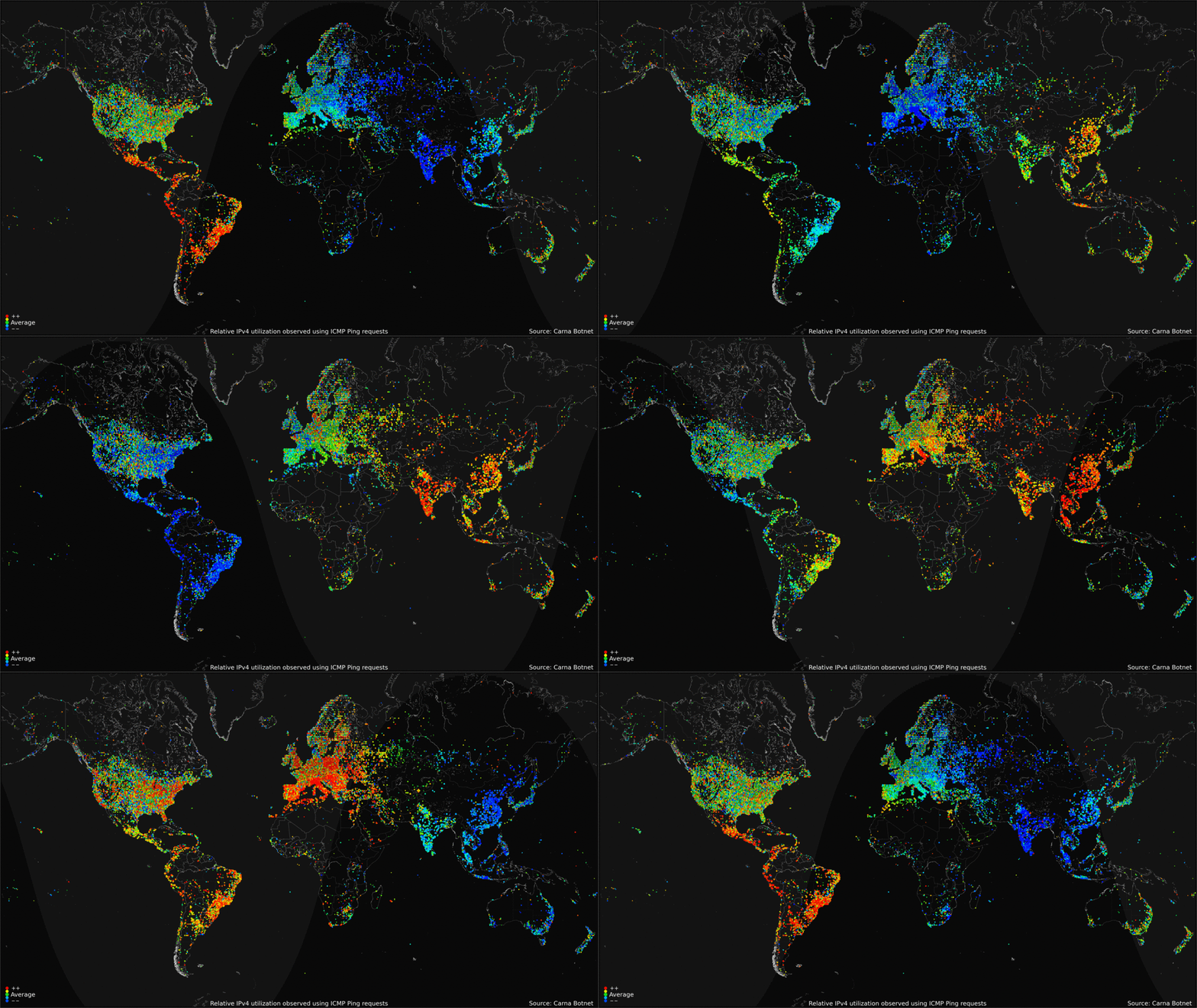
Organisations such as Wikipedia, the Free Software Foundation and even projects like One Laptop Per Child should be those to lead. Although these organisations lack in funds, they can be easily supported by governments in a charitable way; but why should governments be interested in funding them? The internet has been a trouble maker for past and current governments. People have been able to start revolutions through it or release massive classified information that changed the way we looked at them, drastically. Why should they be the ones to fund something that is conflicting with what they are doing?
The answer is simple, they are not interested and that’s why they don’t do it. For this reason, we end up relying on organisations such as Internet.org, where capitalists are trying to make more money. This is a wicked problem, there is a solution, a quick one, but in order to reach it, we need to let other people become richer and bigger. It’s the price to pay, if we want a free internet for everyone.
Do we agree with the way the world operates? No, but at the moment, we don’t have any alternative. We just have the hope that Google’s motto “don’t be evil” can be followed by every single company that is trying to bring the biggest innovation ever in other developing countries.