Share This

In the past few years, we have been looking at thousands of companies iterating on their products. Redesigning the layout, changing fonts, changing the logo and adding more features are things that happen every day. When you especially have a design team that becomes a must, because they obviously have to find “something” to do for the rest of their day. If you are starting up and iterating on single features, you might be even listening to your users; but if you become a large and established company, you have probably felt that nothing can stop you.
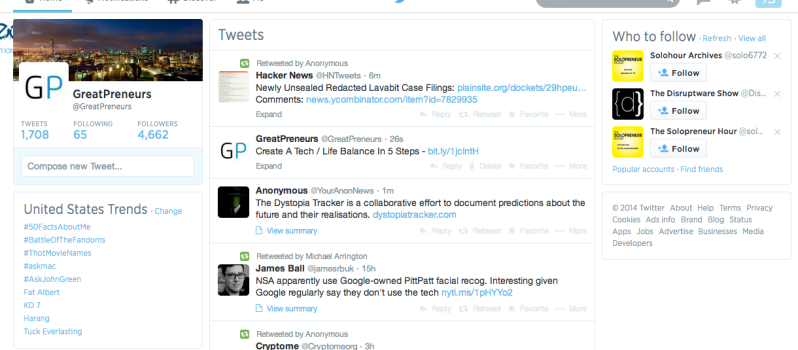
That “already established” thought has weaken the “what the user is thinking” side and you are probably changing things around your product just for the sake of doing it. This behaviour is something so common that we don’t even need examples, because it happens every single day; but the one who got me the most is the way Twitter changed its layout and a few days ago, its font.
Without saying anything to its users the company switched its previous design to a “new” one that looks like Facebook. Less than two days ago, they also changed the font, which made me think there was something wrong with my web browser, before actually realising that was Twitter.
It’s true to say that fashion is never finished and it’s also true that a great design team is what really makes the difference. However is there a way to meet the users’ needs without changing the product in a creative way? In the last years, Facebook and Twitter have become our virtual homes, where users spend most of their day, directly and indirectly. Why couldn’t they be in control of what they use?

The concept of direct democracy is very close to what we are trying to focus on. In a direct democracy, people decide “policy initiatives directly, as opposed to a representative democracy in which people vote for representatives who then decide policy initiatives.” In this system the people are directly involved in the world they live in. Since Facebook and Twitter, but even many other platforms, have impacted the way we live drastically, why couldn’t we apply a similar model?
I am not referring to driving the innovation thanks to the users’ feedback. A company should be able to make its own decisions regarding a possible pivot, a new product or even a new feature. However there are dozens of little aspects that could be decided directly with the users without trying to build the best layout ever and then get a rejection. Although companies are already doing it with a small range of people, such as Facebook which never swapped to its new design after having tested it for a year; no one is doing it on a massive scale.
An interesting case was the Yahoo logo, where the company run a 30 days campaign with a different logo everyday before taking a decision and releasing the final logo. Even in this case, the users weren’t polled and there wasn’t any way to truly understand what they really wanted. It’s true to say the company can understand and study its analytics and identify the best logo through behavioural patterns on the website, but what’s wrong with a Yes/No poll in our Yahoo Mail inboxes?

Tech giants have probably lost their feet on the ground after going through IPOs, acquisitions, new CEOs and more employees; but the problem is always the same. They are there to solve people’s needs, not to change their styles because the design team has chosen a creative font or a new logo. People have the power and if they don’t keep in mind that, people have also the power to turn them down.