
Share This

Many of us are keenly aware of the level of competition the commercial world holds, and it is easy to see the types of pressure businesses face especially in today’s economy. Because of this so many businesses use different strategies and tactics to get ahead of the game, and lately it is more than just the price of the product that consumers are interested in. In fact, there is an increasing amount youth today who worry about who, what and where the goods they are buying are produced, thus recognising a gap in the market. This gap specifically in the fair trade sphere in the fashion industry was recognised by Naomi Wilde, a young founder of Fair-T.
She had started up her business after winning the Venture Further competition held by the University of Manchester that involved submitting a business plan and a 30-minute presentation. In the end her passionate and innovative idea won the prize of £10,000, all of which was used on stock. From there she pursued her dreams and even became a European Finalist in the TiE international business plan competition.
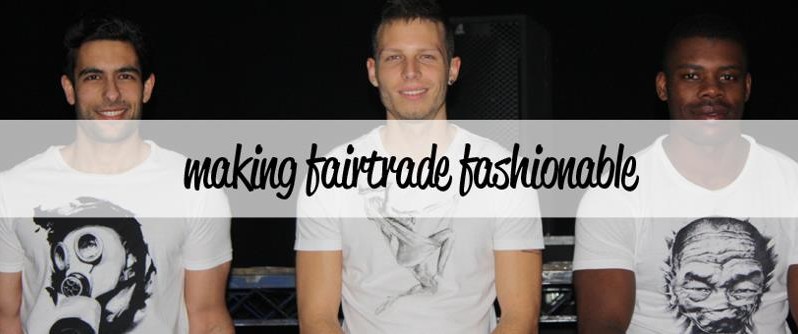
As the core of the business is its fair trade system, she had decided to add another unique point to this already novel brand. Its hand drawn, black ink illustrations that stand out against the white, high quality fabric used for in the production of the shirts. One thing worth noting is the clever strategy utilised by Naomi is her use of student drawn creations as it attracts her target market, most of which are students. In other words, who better understands what attracts a student than students themselves.
Of course with any business one should also evaluate any threats or weaknesses the business faces. From a personal viewpoint, a problem that the business faces, that limits itself because it is so new to the market. The introduction period of any new brand takes a while to pick up and for enough interest to generate for any substantial profit to be made. This being said, this part of the product life cycle usually may be as short as a few months to two years long, so survival in the market place will be tough especially against other well-established brands like H&M. But, realising these difficulties from an early start, Naomi has taken great steps to a number of workshops hosted by the Business Growth Hub Start Smart.
One thing she might wish to consider is to enhance how easy it is to look for the company on not only social media’s like facebook but on google so that anybody who is recommended to use the brand will be able to find out more rather then having to search through the internet; this could be done by having the website stated on price tags on future products and so on. Perhaps once the business picks up even more, Naomi may wish to expand the colour scheme of the shirts by possibly requesting students to use coloured pencils for their drawings in order to draw out more potential from a particular drawing.
In conclusion, the business does face a lot of challenges simply because it is sole-trader led thus resulting in long hours and little returns at the very beginning. In addition, as stated previously a new business will always be threatened with take over’s and so on by bigger companies. But Naomi’s determinations towards the cause of fair-trade and desire to allow the business to grow organically will surely be worth all the while.