
Share This

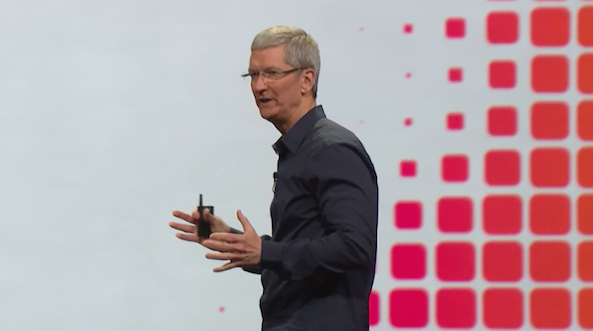
If innovation meant building products, Apple wouldn’t be the company that is today. However, even yesterday, after Tim Cook closed his keynote for the beginning of the 25th WWDC conference, a lot of people were disappointed. Why? The reason behind their disappointment was the absence of a product in physical terms. What they didn’t see yesterday was the release of an iWatch or another MacBook Air.
What they were missing while being disappointed were two facts that should be clear after more than twenty five years. WWDC is a developer conference, which doesn’t mean that Apple can’t introduce a product on stage, but it means it’s more developer focused. That’s why every single person who was on stage repeated the same sentence “We love you guys”. They know that the developer community behind Apple is what really makes the iPhone and the Mac two remarkable products.
The second massive fact is Steve Jobs‘ view of what Apple was and still is. This company is not an hardware company, Apple is a software company. As Jobs points out in the video, the iPod is a beautiful box, but without the software that operates in this beautiful box, there wouldn’t be any iPod. It’s the same with the Mac, which is what it is thanks to OS X.
Innovation also means the ability to give to other people, in this case developers, the power to innovate. That’s what Apple wanted to achieved at WWDC. There are currently 9 million registered developers, which is up 47% from last year and the company knows that is a goldmine. The iTunes App store has 1.2 million apps and has seen 75 billion downloads since its launch.
From a developer point of view, writing one line of code, instead of three or even four, is more innovative than the release of the next generation of MacBook Airs. Why? Because it means developers, the people who have built a 1.2 million ecosystem of apps, can write better code and in a faster way; which also means they can add more to what they have already built, instead of wasting their time.
The company announced CloudKit, which sounded close to what Parse is already doing with Facebook, but they didn’t add much details. They also introduced Metal, a new 3D API that brings graphics to the next level. Further, they decided to take a look at a twenty years old technology, Objective-C, and build a new language, Swift, to make the life of the developers easier.
They also introduced OS X Yosemite and iOS 8, which will be available in the fall. However it’s relevant to underline the fact that they expanded to two raising markets, Health and Home. The company released HealthKit, which is an app that collects your health data, and HomeKit, an SDK, that will enable developers connect objects in houses with iOS devices. This is what Google tried to introduced with Android@Home a few years back, which hasn’t still taken off.
Apple just reasserted dominance of the developer ecosystem. Which means better apps. Which drives more device sales. And so forth.
— Aaron Levie (@levie) June 2, 2026
In the next future (fall), we’ll probably see the release of new devices and hopefully something wearable, which is what we are all waiting for. Until that moment, we just have to hope that those thousands developers that were attending WWDC can bring their creativity to the next level and add more value to the Apple Store. With a persistent job crisis and a lot of iOS developer books around, it’s easier to start developing apps today than it was in 2007.
There is a reason why the youngest developer attending WWDC ’14 was 13 years old.