
Share This

As many tech blogs (such as Forbes) and business insiders have reported, the losses in the social media market have been huge in the last year. If you look at Mark Zuckeberg, Mark Pincus and Groupon, you see that these big guys have fallen in the last six months cause of IPOs and unhealthy business models. What we are wondering is if the social media bubble has burst or if it is just a transitional period. The first assumption we make is that social media will keep going for the next several years without stopping, because people want to know what other people are doing.
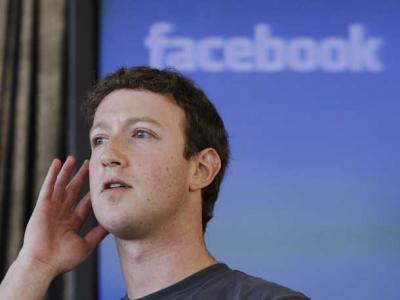
We still believe that. It is true that Mark Zuckerberg has lost billions of dollars in net worth cause of the Facebook’s IPO; but that wasn’t due to a lack of interest in Facebook from its users, but to an overvalued stock and market capitalization. Facebook went public with a valuation of 108B$ dollars and with revenues that were close to 5B$ per year, which didn’t reflect the huge valuation that Facebook chose for its first day trading.
 On the other hand the fall of Zynga can not be associated with the burst of the social media bubble, since Zynga has been fallen down for its own personal reasons. A lack of good and rational management from its executives, a bad culture inside the company and the production of similiar games stand for the dead of Zynga and Mark Pincus, who wasn’t able to adapt and diversify.
Further Groupon, whose growth has been so big, has faced a lot of problems in terms of market share. By rejecting the Google’s offer the company has decided to go forward alone and this choice has enacted its own fall on the market. We believe they can be back as soon as they find a way to improve their revenues model and stabilize this steady and fast growth.
Social media will never fall, cause people like to interact. What it might change in the next years or decades is the way we interact between each other. Thanks to the fast development of technology we are able to build great connections and improve the way we communicate. For this reason, it is easy to see a possible switch in the way we communicate. Maybe in the next ten years we would share our Facebook statuses by our voice, by our eyes or even by the way we move our hands.
With the raise of new smart cars and tv, the way we share our social experience will be a lot easier. This development will help social media in a way it didn’t help before. If we look at Twitter we see what we are talking about. Jack Dorsey tried to launch his idea in 2000, but smartphones weren’t available and people didn’t know they were able to share what they thought with others. In 2006, Jack Dorsey came back with the same idea and the obsessive use of new smartphones and mobile devices helped the growth of Twitter, which soon became one of the most used social media.
In the next years, our physical life will be on the internet and from the shift of this paradigm we can expect new innovations. In a world in which every single object we own is connected to the internet, the social experience will be massive. Our clock, our scarf, our shoes and our pans will be connected to the internet and they will enable us to share and engage in new social activities.
It is obviously true to say that this market is risky. Facebook, Zynga and other many companies have had a few problems in the past because there are a lot of competitors, the market is unknown and if you play hard you can even lose everything. This is completely true, you can lose everything, but if you succeed you will win over thousands of people who failed before you. Further when you win in this market, it means that you have an userbase of millions of people who are waiting for your next release or step.
I personally believe that internet mass consumption market is astonishing and incredibly interesting; but you have to play hard in order to reach your aim, because everyone here doesn’t want to lose.