

Share This

When you see that Facebook acquires Whatsapp for $19 billion, you think “The Game Is Over.” That’s what most of the people who are using private messaging apps might have thought, but the truth is that the game is still on. Although Facebook now owns two messaging apps, Facebook Messenger and Whatsapp, which counts half a billion monthly active users, there are still other services that are rocking and aim to be better, faster and more secure.
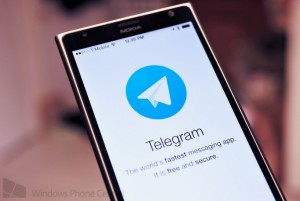 I am talking about Telegram that saw a rise in users sign ups in a single day by 8 million. These numbers don’t count much, but it means there is still a slice of market that is willing to find a new app for exchanging messages. While the other services aim to build an easy and cool platform, Telegram wanted to develop the most secure private messaging app. The idea came up to the founder of Vkontakte, the most used social network in Russia, who wanted to build something that was able to let people message freely without having the NSA or the Russian Government looking at conversations.
In a historical moment like this one, where everybody is talking about the NSA, Telegram seems to be the solution and the mass media coverage, thanks to Edward Snowden, might give them enough momentum to survive. Further what Telegram has that no one of the apps on the market have is an identity. Telegram is and will be a no-profit company for the next years, whose aim is to let people chat freely without having no one looking at what they write. This service doesn’t want to become the first in the world, it wants to fill a need that we all share.
However people don’t care about security or privacy, they care about their friends and if no one is on the network, they won’t use the service. We recently reviewed Ansa, an app whose concept is really interesting, but I was forced to stop using it after 5 minutes, because no one of my friends was using it.
In the same way, the Asian market seems to be already taken by WeChat, an app that has got an incredible popularity in China. If you can advertise your app with Messi, it means you are either rich or your business is going really well. Further, the company has just released a client for Mac that will let users chat on the service through their laptops. They have also promised that a Windows version is yet to come.
What we should focus on is if Facebook is able to overwhelm them all. A company that is ten years old and that has a market capitalisation of $170B should be able to rule the whole market. The Messenger team and the Whatsapp one will have to team up and take Messenger down to focus on one single product. Even though Facebook said that Whatsapp would keep operating as a single identity, at some point, the integration will come, simply because 1.2 billion people are on Facebook every month.
It seems that an app which is getting a million users per day and gets acquired from Facebook can’t be beaten, but users don’t care, they just want to chat. That’s why the market is still open. Even though I do believe Telegram hasn’t got a future, in terms of massive user adoption, for the simple fact that two big fishes are already playing this game. Whatsapp and WeChat are fighting this war, which might end with a simple draw, because these services have the majority of their users in completely separate regions.

However Mark Zuckerberg is not the guy who likes the word “draw” and that’s why both companies will try to steal each other users in the next months, by introducing new services, such as desktop clients; but the question is, how do you differentiate? Telegram found a different identity by aiming at security, but Whatsapp and WeChat are already in the game with a different mission, connecting people (and making money). It’s more about convincing more users to join the network that making the app more beautiful or secure.
As soon as my friends will start using Telegram or WeChat, I’ll move to these services without even thinking about it, but at the moment I will stick to Whatsapp, which seems to be in good hands.




Pingback: The Future Of Social Networks | Great Preneurs
Pingback: Whatsapp Is Scared Even After Billions | Great Preneurs
Pingback: Advertising, Can We Live Without? | Great Preneurs
Pingback: We'll Die Before Someone Replaces Email | Great Preneurs