Share This

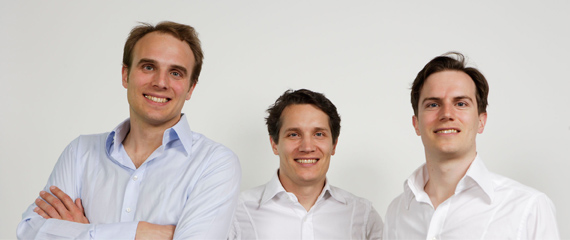
The three German brothers Oliver, Marc and Alexander are some of the most accomplished internet entrepreneurs in Europe, but their success is also seen as highly controversial. They have been able to create some of the best high-growth businesses that Europe has seen, leading to acquisitions from the likes of eBay and Groupon. Yet there are many who look down on the Samwer brothers with disrespect.
Why? The unofficially nicknamed “kings of clones” are accused of copying proven high-growth companies such as LinkedIn and Airbnb in non-English speaking countries before the original company has had a chance to enter that market. They often end up selling the business back to the originators of the idea and have used the proceeds to invest in companies such as Facebook and Zynga.
This debatable strategy has seen them face disapproval from many high profile industry leaders, Jason Calacanis reportedly called the brothers “despicable thieves”, asking “how do they sleep at night?”. It is understandable then, to see why they are publicity shy. Although it does not seem to faze the clone kings, who are highly educated with degrees and MBAs from Oxford and Harvard. They understand that they are not original, seeing themselves not as innovators but as builders.
Their clones can be found all over the world from Germany to China and Brazil taken from the US and Asia. They use the untapped non-English speaking markets to their advantage and infiltrate them before the originator is able to do so. It could be seen as a dirty tactic, but there is no denying that it is one that’s working very well.
The Samwers stumbled into their model out of the frustration of eBay’s lack of presence in the German market. They appealed to eBay several times to enter the economically attractive country and for them to be hired to head up the operation. However after the string of emails got no replies the entrepreneurs returned to Germany to create their own platform.
Fast forward one month and they had developed Alando, a German language online auction website. The site took off and 100 days after going live Alando was sold to eBay for a cool £35 million. Three months and £35 million – no wonder the brothers chose to run this model again and again.
They stayed with eBay for a year, leaving to set up a mobile-phone-content platform called Jamba! Which eventually sold for £176 million in 2004 to VeriSign. You can also thank the brothers for the creation of the famous yet incredibly annoying number one hit Crazy Frog during their time there. Having proven their business model which used the innovative feats of others they moved on to replicate it.
The clone kings were responsible for German copies of US models including MyVideo (YouTube), StudiVZ (Facebook) and Frazr (Twitter). In 2007 they set up an incubator in Berlin called Rocket Internet. Often called the clone factory, the incubator has seen come incredible performance with only 5 out of 30 startups failing. Rocket Internet has produced some of the fastest growing startups, the brother’s passion for perfect execution and faster scaling clearly has been a huge influence.
There is no doubt their strategy has been a highly successful, however there has been concern for the wider effect on the European startup scene. The influence of the brothers could be killing the originality and innovation that Europe desperately needs to bring it to the level of the US. Le Meur, founder of Le Web shares this view, arguing that the Samwer success encourages more copycats. He states that it is “killing innovation in Europe. It’s telling young entrepreneurs that the ideal way to make money is by copying something that works in the US, then selling it back to the original.”
One does have to question, is what the brothers are doing so wrong? I would argue no. The history of economics shows that a novel or innovative idea rarely (if ever) exists as a single operator in a market for long before imitators and competitors enter the market, think Coke vs Pepsi, Apple vs Android and so on. If the Samwer’s were not doing it somebody else would be. Competition is healthy and we see monopoly generally as a bad thing so one could suggest that what the brothers have done should not be seen in such a negative light.
We can look further as to what the impact has been on the Berlin tech scene. Sure, there are plenty of ‘copycats’ but I believe that this is where innovation will be born. Many of these copycat entrepreneurs will go on to build some of the webs next biggest ideas after they have apprenticed in their clone businesses. Look at Japan, they have not always been world leaders in car design, they themselves initially copied off the Germans but now are a centre for automobile innovation. The first signs of this for Germany’s tech scene comes from SoundCloud, probably one of many revolutionary startups to come out of Germany in the future.